Drone technology and BIM: A Powerful Combination for Construction
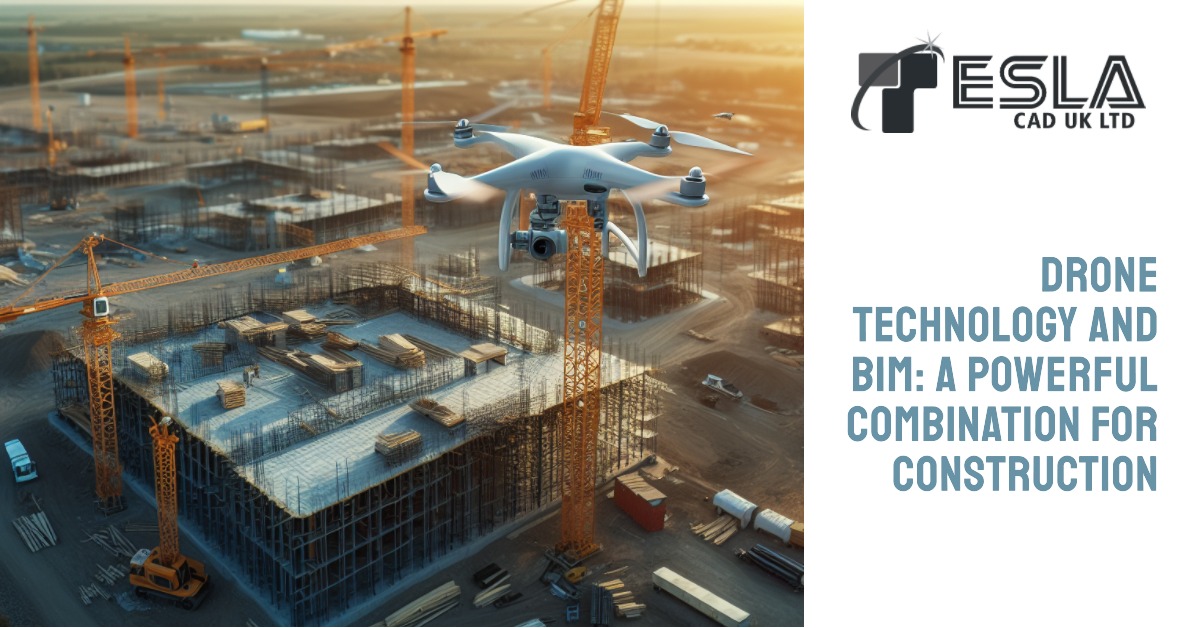
Building Information Modelling (BIM) has been a game-changer in the construction industry, streamlining workflows and enabling architects, engineers, and contractors to manage construction sites more efficiently. BIM Modeling Services have evolved over time, integrating new tools and techniques to enhance its capabilities. One such technology is Drone technology, which has experienced rapid advancements in the past decade.
Nowadays, drones are not only available as a concept but have become accessible to businesses and civilians for various purposes, including work and recreation. The construction industry is among the many sectors that have embraced drone technology, as it offers numerous applications that can improve efficiency and safety. Drones, when combined with BIM, can accomplish a wide range of tasks, such as site inspections, progress monitoring, and data collection for construction drawings. In this blog, we will delve into these applications in detail, showcasing how drone technology is revolutionizing the construction industry and enhancing the benefits of BIM.
The role of BIM in Construction and how Drones fit into this
BIM facilitates the construction process through the provision of a centralized 3D model encompassing comprehensive project information. This singular model fosters efficient collaboration among project teams, diminishing errors. Drones have subsequently elevated BIM capabilities by gathering high quality building data, subsequently uploaded to BIM software. This integration results in heightened precision in 3D modeling, along with presenting construction teams with a fresh perspective. Drones play a multifaceted role in BIM, encompassing site inspections, progress monitoring, data collection, and safety enhancements—introducing a valuable tool to the construction industry. Let’s delve into how drones can contribute across various phases of construction.
Planning and Preconstruction Phase: Aerial Intelligence Redefined
In the planning and preconstruction phase, the integration of drones equipped with advanced sensing technologies brings a paradigm shift. Drones swiftly capture high-resolution aerial imagery, creating detailed topographical maps and 3D models. These visuals are seamlessly integrated into BIM platforms, providing stakeholders with a comprehensive understanding of the construction site’s terrain and potential challenges.
Imagine a scenario where a construction site is situated in a complex landscape. Traditional surveying methods might be time-consuming and cumbersome. However, a drone, equipped with LiDAR sensors and a high-resolution camera, can effortlessly navigate the site, capturing data that is instantly integrated into the BIM model. Scan to BIM services powered with drone tech not only expedites the planning process but also enhances accuracy, enabling engineers to make informed decisions.
Construction Phase: Real-Time Monitoring and Collaboration
As construction commences, drones equipped with real-time monitoring capabilities become the eyes in the sky, providing unparalleled insights into the ongoing activities. These drones, connected to the BIM system, continuously update the project model based on the real-world progress.
Consider a large-scale construction project where multiple teams are working concurrently. Drones equipped with cameras and sensors can monitor the site 24/7, capturing data on material usage, progress milestones, and potential bottlenecks. This real-time information is instantly fed into the BIM platform, fostering collaboration among teams and allowing project managers to make data-driven decisions on the fly.
Operations Phase: Maintenance Efficiency Elevated
The integration of drones and BIM doesn’t end with the completion of construction. In the operations phase, drones equipped with thermal imaging and sensors can inspect structures for wear and tear, identifying potential maintenance issues before they escalate. This preventative approach not only extends the lifespan of the infrastructure but also minimizes downtime.
large facilities need regular inspections. Instead of sending human inspectors into potentially hazardous environments, drones can navigate through the facility, capturing detailed images and data. This information is then integrated into the BIM model, creating a comprehensive record of the facility’s condition. Maintenance teams can use this data to plan targeted interventions, reducing costs and increasing efficiency.
Maintenance Phase: Augmented Reality for Repairs
In the maintenance phase, drones take on a new role by combining with BIM to implement augmented reality (AR) for repairs. Through AR, maintenance teams can visualize BIM data overlaid onto the real-world structure through smart glasses or handheld devices. This immersive experience enables precise identification of maintenance points and facilitates more accurate repairs.
Conclusion:
The relationship between drone technology and BIM is ushering in a new era of construction excellence. From the earliest stages of planning to the ongoing maintenance of structures, this collaboration enhances accuracy, efficiency, and safety. As we embrace this technological synergy, the construction industry stands poised for unprecedented advancements, proving that the sky’s the limit when it comes to redefining the future of building.