
Factors Considered by Revit users before developing a loadable family in Revit
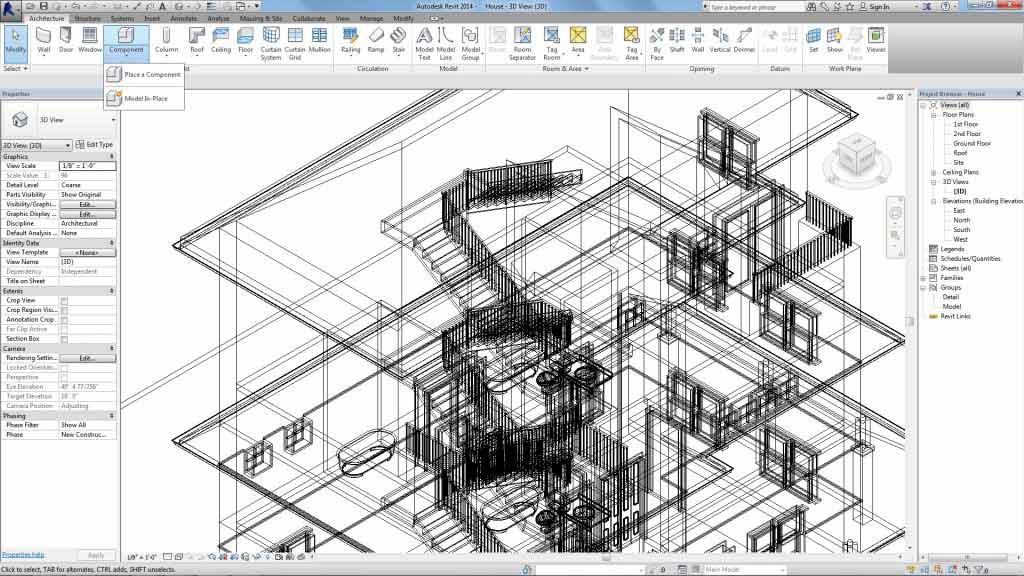
Family creation is an intrinsic and integral part of Revit projects especially Revit modeling projects, wherein families are essential for completing a model. But before developing any sort of family in Revit Family Editor, Revit users have to consider various factors that can affect its precise development. Development of a loadable family is largely controlled or determined by the family template chosen by Revit users for its creation. Family templates primarily and principally serve as building blocks which contain pivotal and paramount information for generating a family in Family Editor.
Factors considered by Revit users before developing loadable family
- Before going ahead with family development in Revit, its users are definitely required to give a thought in terms of its size.
- It largely depends on size variability of a given object that whether Revit users should develop an in-place family or a loadable family in Revit.
- For further clarification let me give you an example, if in case Revit users want to create a bookshelf which can obviously be created of any size or length, they can always go for developing a standard component family. However, if users are required to develop a custom piece of certain equipment that does not come in different configurations you have to create an in-place family and not a loadable family.
- Another important thing that is considered by Revit users is that how they want the family to be displayed multiple views.
- The geometry creation of a family is largely determined by the way it displays in a view. So it must be determined by Revit users that where they will display their family for example in an elevation view, plan view or it will be displayed in a section view.
- The next thing that should also be given a thought is whether a family requires a host or not. This helps Revit users in determining an appropriate family template for the family in question. For example, a window family is generally hosted by a wall so it determines that a wall-based family template must be chosen by users for creating a window family.
- Revit users should also remain aware regarding the number of details that should be modeled by them in the family.
If the above-mentioned points are clear to Revit users they will definitely end up creating effective loadable families in Revit.