
How to preserve the timeless elegance of the 120-year-old Hotel Ritz?
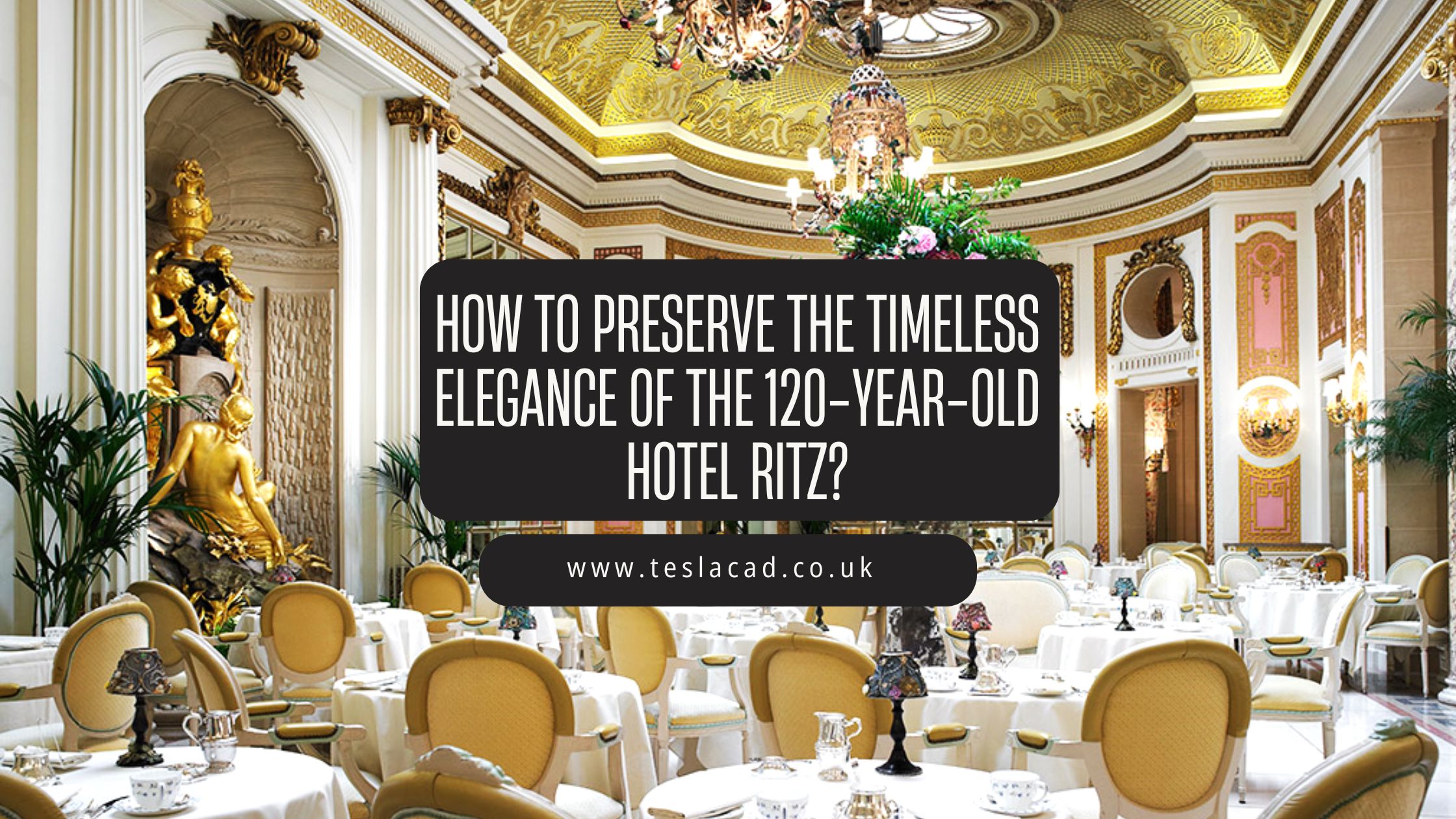
Celebrating a special occasion at The Ritz is a dream come true for many, epitomizing the pinnacle of British luxury and refinement. This glittering hub of elegance and sophistication has hosted royalty, celebrities, and discerning travellers, all drawn by its opulent décor and impeccable service since it was established in 1906. From its iconic afternoon teas to grand ballrooms, The Ritz exudes timeless charm and remains a cultural landmark where memories are made.
While these (rundown carpet) issues can be temporarily addressed with new carpets and fresh paint, lasting solutions are essential to preserve the grandeur and security of the Grand Dame of London.
In this blog, we explore the strategies and measures necessary to maintain the timeless elegance of The Ritz, ensuring it continues to shine for centuries to come.

1. Conduct a Comprehensive Building Scan

Conducting a comprehensive building scan is crucial. This process involves utilizing advanced scanning technologies to capture accurate and detailed representations of the building’s current condition. The benefits of such a scan are manifold. First, they provide an exact digital twin of the structure, allowing for meticulous planning and maintenance without intrusive measures. This is especially important for heritage buildings where preserving the original architecture is paramount.
Building scanners utilise laser beams (infrared rays) that penetrate deeply into the building and record the information. This method is particularly advantageous for its high accuracy and effectiveness in capturing intricate details, making it ideal for documenting complex and ornate architectural features. Photogrammetry, on the other hand, involves taking numerous real-time images from various angles. This technique excels in providing high levels of detail and accurate texture mapping, allowing for the visual appearance of surfaces.
You can hire services from Leica, or Faro who are old hands in this field. Their expertise will help you in creating a scan that has fewer illegible areas and dark parts.
Both companies are well-regarded for their advanced 3D laser scanning technology. Leica offers products like the BLK360, which is widely used for detailed building scans and generating accurate point cloud data. Similarly, Faro provides the Faro Focus Scanner, which is also popular for its precision in capturing comprehensive building scans.
If you require to highlight a particular area for its ornate value or an area that requires restoration you can opt for real views and mirror balls. These technologies when stitched in the building scans provide a 360-degree panoramic image of the environment, enabling a comprehensive visual inspection of every corner and detail of the building. This is crucial for identifying areas that need attention without physically accessing them, thereby minimizing wear and tear.
2. Verify and Analyse Scan Data
Once a comprehensive building scan is conducted, the next critical step is to analyse the scan data. This process confirms that the captured information is accurate and reliable, forming a solid foundation for any preservation or restoration efforts.
Verification involves cross-referencing the scan data with existing architectural plans and physical inspections. This step is essential to identify any discrepancies or errors that may have occurred during the scanning process. Additionally, it ensures that the digital model truly represents the current state of the building and meticulous verification helps prevent costly mistakes during the renovation phase. Apparently, it safeguards the integrity of the historic structure.
Analysing the scan data involves a detailed examination of the digital model to identify areas of concern. Advanced software tools can be used to simulate various scenarios, such as structural stress tests and potential wear over time. This analysis helps pinpoint specific areas that require immediate attention, such as structural weaknesses or areas prone to moisture damage. Moreover, it can highlight opportunities for improving the building’s efficiency, such as better insulation or more effective drainage systems.
3. Develop Advanced BIM Models
Developing advanced Building Information Modeling is a crucial step in preserving the architectural integrity of historic buildings like The Ritz. BIM Models are sophisticated digital representations that encompass every aspect of the building, from structural elements to intricate design details. These models enable a holistic view of the property, facilitating better planning and decision-making.

The benefits of using advanced BIM Models are substantial. Primarily, they provide a comprehensive and precise depiction of the building, allowing for detailed analysis and simulation. This is particularly valuable for heritage buildings where maintaining original features is essential. BIM models enable the identification of potential issues before they become significant problems, thus reducing the risk of unexpected complications during restoration work.
Additionally, BIM models enhance collaboration among architects, engineers, and contractors. By having a shared, accurate model, all stakeholders can work seamlessly together, ensuring that every aspect of the renovation is well-coordinated and executed with precision. This leads to improved efficiency, cost savings, and a higher quality of work.
There are many BIM Service Providers, including Tesla that excel in creating detailed and accurate BIM models to cater to the specific needs of historic buildings. Their expertise ensures that the models are not only precise but also tailored to preserve the building’s unique characteristics and historical value.
This step is instrumental in maintaining the timeless elegance and structural integrity of the hotel, ensuring it continues to shine for future generations.
4. Renovate and Reinforce Critical Areas

Renovating and reinforcing critical areas of The Ritz is a pivotal step in preserving its timeless elegance and ensuring its structural integrity. This step focuses on addressing the most vulnerable parts of the building, ensuring that they are not only restored to their former glory but also strengthened to withstand future wear and tear.
The renovation process involves meticulous work to repair and refurbish areas that have deteriorated over time. This includes restoring ornate architectural features, replacing work materials, and updating outdated systems without compromising the building’s historical character. Skilled craftsmen and preservation experts are often employed to ensure that every detail is handled with care and precision, maintaining the authenticity and charm of The Ritz.
Additionally, techniques such as underpinning foundations, reinforcing load-bearing walls, and upgrading roofing systems can be employed to stand the building in good stead for many more years. Modern materials and technologies must be used discreetly to blend seamlessly with the original construction, preserving the aesthetic integrity of the Hotel.
Leveraging advanced Building Information Modeling (BIM) Models, which integrate detailed scan data, facilitates precise planning and execution of renovation projects. These models provide a comprehensive digital representation of the building that enables architects and engineers to stimulate renovation scenarios and assess their impact.
BIM models play a pivotal role in renovation by allowing for accurate visualization and analysis of proposed changes. They facilitate collaborative decision-making among stakeholders as well as ensure that renovations align with historical preservation standards while meeting modern safety and efficiency requirements.
The benefits of using BIM models in renovation extend beyond accuracy and efficiency. They offer cost-effective project management solutions, minimize disruptions to hotel operations and adhere to compliance with regulatory standards.
5. Proactively Plan Future Maintenance
The Ritz is a timeless elegance and to keep up that name it is essential to plan its maintenance proactively. The best way to do this is by leveraging BIM 7D (Building Information Modeling) technology. This technology has facilities management and lifecycle management features and offers a robust framework for this forward-thinking approach.

BIM 7D goes beyond the traditional scope of building models by integrating time-related data for effective maintenance and renovation planning. It enables facility managers to schedule future repairs with precision, ensuring minimal disruption to hotel operations and guest experiences.
One of the significant advantages of BIM 7D is its ability to simulate and forecast the impact of various maintenance scenarios. This predictive capability allows for strategic decision-making, ensuring that repairs or altercations are not only timely but also cost-effective. The Ritz can allocate resources efficiently and avoid unforeseen expenses while maintaining its high standards of luxury and elegance.
Moreover, BIM 7D facilitates continuous monitoring and updating of the building’s condition. This proactive stance guarantees that the hotel remains in pristine condition, adhering to safety standards and preserving its historical value. Tesla, a leader in providing BIM services, incorporates 7D modelling to support clients in planning and executing effective long-term maintenance strategies.
On a final note, The Ritz can sustain its grandeur and functionality for generations to come if it proactively plans future renovations using BIM 7D technology and other steps as mentioned above. This strategic approach preserves the hotel’s historical significance as well as augments its ability to deliver exceptional experiences to its elite guests.