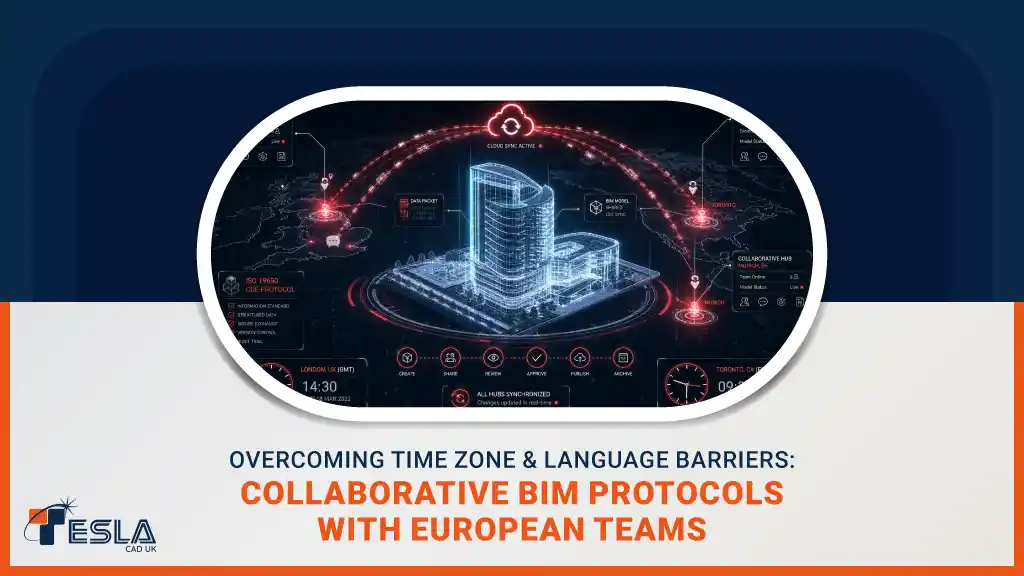
With the rapid growth of the construction industry, BIM projects today have started panning different offices and even different countries. Stakeholders like architects and engineers have started collaborating across borders to deliver complex BIM projects on tight deadlines. This international approach can give access to specialized expertise and scalable resources in lesser cost & time. However, it can also introduce challenges like differences in time zones, communication styles, and even languages.
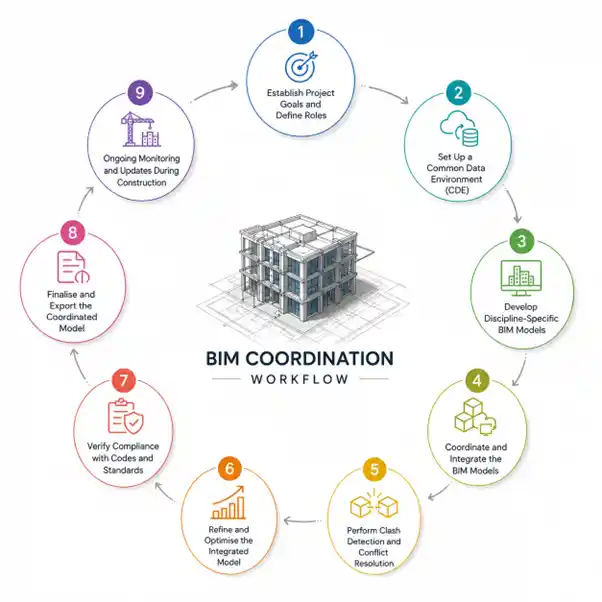
As per the European Architectural Barometer, BIM adoption by European architects has increased from 10% in 2009 to 45% in 2023: a speedy transformation in the construction sector.
For remote BIM partners to function smoothly, you need collaboration, not only technical, but beyond. What shall help? Structured communication and standardized workflows. As a leading firm in the industry for two decades, we at Tesla CAD UK have worked with AEC professionals across Europe, helping people set up coordinated workflows and proactive project management systems.
Growing Need for Cross-Border BIM Collaboration
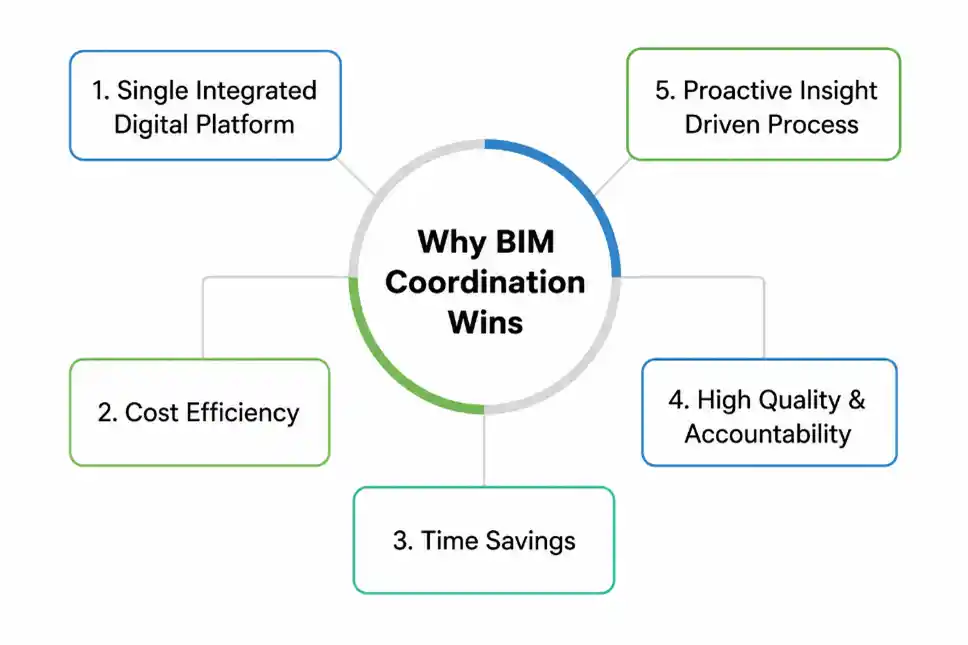
Construction sector in Europe has started relying on distributed project teams. The architect may in UK, with structural consultants in Germany, MEP specialists from Ireland, and BIM modelers offshore in South Asia. BIM has been designed to support such a collaborative ecosystem: with centralised data exchange and coordinated workflows. For modern construction projects, asynchronous multidisciplinary collaboration has become essential.
However, international collaboration definitely creates difficulties if standards of communication aren’t defined from the beginning. Approvals get delayed, markups are misunderstood, and there is unclear model ownership. This can affect project schedules and even coordination quality.
Thus, alongside BIM modelling accuracy, it’s important to have collaborative BIM protocols.
How to work with Time Zone Differences
Time zones, with the right protocols, can actually improve project efficiency, not decrease it. The issue isn’t the time difference actually: it is the absence of structured communication. If the stakeholders have not agreed to response times, taken task ownerships, or finalised review cycles, teams will have to wait for hours to get clarifications and approvals. Some of the coordination challenges can be:
- Delayed responses to clash detection or RFIs
- Overlapping revisions
- Unclear review responsibilities, meaning missed deadlines
- Difficulty to schedule live meetings
- Inability to check daily progress
Experienced BIM partners, like us, can address this issue through workflow planning, moving beyond real-time communication. We work with systems like reporting structures, milestone tracking, and scheduled coordination timings to maintain the momentum of the project, irrespective of location.
BIM Protocols that Improve Coordination
There are a few standardized procedures that BIM projects can rely on to create consistency between different teams spread across the world.
1. Standardized Naming
To exchange BIM data on a daily basis, you must follow a standardized file naming system. Simultaneously, this naming system should also align with ISO 19650 principles, so that each team can easily identify file revisions and approval statuses. This naming system minimizes confusion and also reduces the risk of outdated files being used for coordination.
2. Common Data Environments (CDEs)
A centralized CDE is the single source for information for all project details for all participants. Instead of scattered emails, BIM teams can use CDEs to for synchronized project data, controlled permissions, as well as revision histories. This will also improve transparency and accountability between the teams.
3. Defined Communication Methods
To overcome communication issues, the easiest method is to appoint one person in each team as a single point of contact. All members of all the teams should know which one person is responsible for approvals and clarifications from the other teams. When the project picks up speed, this method of communication will eliminate confusion and prevent gaps.
4. Scheduled Coordination Cycles
Teams may all have different working hours, so you can use ‘golden overlap’ windows where all teams may be working, to conduct live communication like screen-shares, decisions, and live coordination.
Apart from that, establishing recurring coordination schedules can help reduce this dependency on live communication. You can create schedules for:
- Model submissions
- Review of clash detection
- Responding to markups
- Approvals
Creating a predictable structure like this improves the efficiency of all teams, and keeps the project running continuously.
Managing Language in BIM Projects
Although English may be the default language for BIM projects, language barriers may occur: not due to fluency issues, but rather inconsistent terminology, different interpretations, or even abbreviations. Architectural terminology may differ between countries slightly, even amongst European countries, which can be an issue in the long run.
To maintain documentation standards and coordination, BIM workflows can be enhanced to overcome the language barrier through:
- Visual communication using 3D models
- Standardized annotation systems
- Clear, documented BEPs
- Lexicon sheet included in BEPs
- Issue-tracking procedures
- Shared modelling standards and templates
When BIM models are well-made, it automatically reduces the reliance on verbal explanations.
We, at Tesla CAD UK, also suggest the use of two stakeholders of different languages to approval all drawings and models. It may be expensive, but not as much are reworks which might be needed due to misunderstood documents. Our expertise at Tesla also comes through internationally recognized workflow & coordination standards which can be used across the entire global market.
Just Technology Is Not Enough
Tools like Revit, Navisworks, and cloud-based platforms are essential, but just advanced BIM software cannot solve collaboration issues. Process management is needed as much as technology. A successful collaborative project between internationally placed BIM teams includes:
- Clear accountability & communication
- Timely reports
- Discipline of work
- Quality assurance procedures
61% of businesses have implemented, or plan to implement, a Global Business Services (GBS) model within the next two years, a shift that’s normalising 24-hour distributed BIM delivery.
When you combine technical BIM expertise with operational coordination – like we have achieved at Tesla CAD UK – you will be able to easily manage international project delivery.
Conclusion
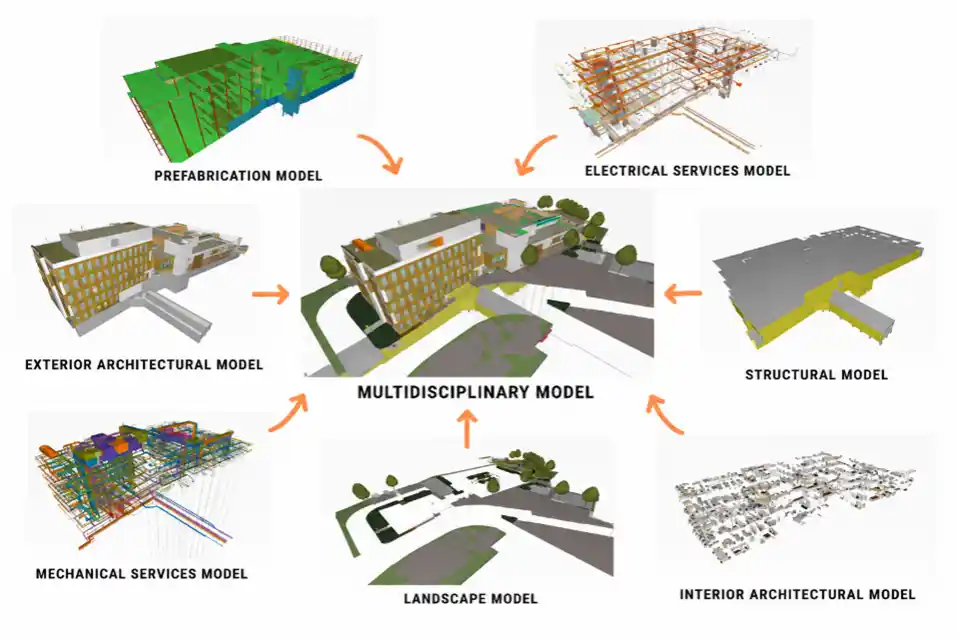
As per the Digital Construction Report of 2025, 72.3% construction professionals in the UK have adopted BIM, which means collaborative workflows will soon become an industry standard.
BIM collaboration is spreading through Europe, as is the critical requirement for AEC professionals to overcome time zone and language barriers. The most successful projects aren’t necessarily the ones which have all teams in the same location – but the ones which have clear communication, standardized workflows, and coordinated protocols.
Time zone differences and language barriers also bring with them diverse, global perspectives and round-the-clock progress. Working in this environment becomes easy with robust BIM standards, CDEs, scheduled coordination cycles, and disciplined project management.
At Tesla CAD UK, we have spent almost two decades understanding and perfecting cross-border BIM projects through coordinated workflows and structured construction practices. Get in touch: we are always happy to shared what worked (and also what didn’t) in our journey.
FAQs
How does BIM help during the construction phase?
Coordinated BIM models can be used for site sequencing and progress tracking – real-time coordination reduces rework and also improves communication between site & office teams. BIM can be used in construction for clash detection, quantity verification, and installation planning. Thus, BIM coordination during construction helps in smoother project execution.
Can working with BIM help me meet sustainable construction goals?
Yes, collaborative BIM processes help in better analysis and coordination during the design stage. BIM can help you evaluate material quantities and their carbon impact during construction. You can also use BIM to understand energy performance of the project. Even before the project begins, BIM can identify sustainability improvements, which will later improve outcomes and save costs.
How does a BEP improve a multinational BIM project?
A BEP is a common working plan for all stakeholders in a project. For multinational projects, BEP lists responsibilities, modelling standards, approval processes, software, and LOD requirements, among other details. With this BEP, teams from different countries can work consistently, which minimizes coordination errors and misunderstandings.
Why are firms adopting hybrid BIM delivery models on a growing basis?
Many firms are combining in-house leadership with external BIM support teams. This is a method firms use to maintain project control, while accessing scalable technical expertise and faster working times, while drastically reducing their overheads. Hybrid delivery models also allow firms to handle fluctuating workloads.