
Navigating the UK Housing Crisis with Modular Construction—Part 2
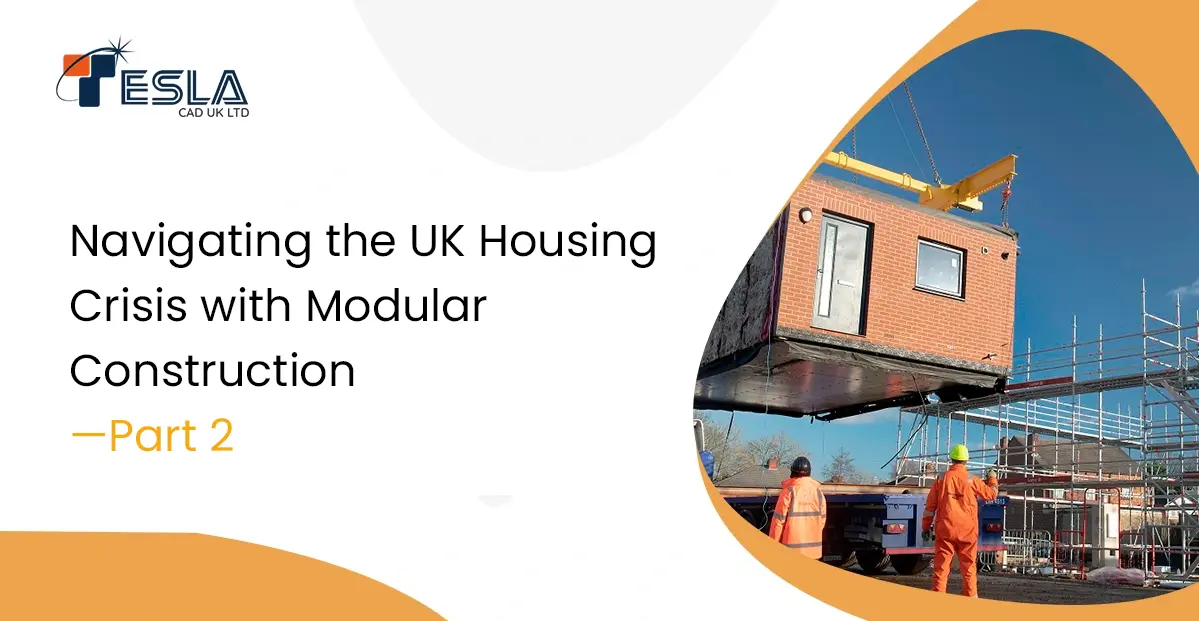
Modular Construction is no longer a buzzword in the housing industry in the UK, but is now on the ground where it is transforming skylines and communities. Whether it is giant modular residential buildings or low-cost housing projects, what is happening in the real world is showing that this methodology can bring speed, quality, and sustainability to scale.
Even more alluring about modular construction is its ecosystem of technologies and policies that underlie it. Modular is rapidly transitioning into the status of must-have as tools such as BIM, robotics, and digital twins streamline the process, and government incentives speed up modular adoption.
In this section, we shall investigate the modular housing projects that have been bringing a radical change to the buildings in the UK, the technological advancements that drive the movement, and the issues that must be addressed, as well as what the future holds in modular construction, addressing the housing crisis.
The UK modular construction market is experiencing explosive growth, valued at £15.7 billion in 2024 and projected to reach £25.1 billion by 2030, representing an impressive 8.2% annual growth rate. The UK now accounts for 15.2% of the global modular construction market.
Real-World UK Modular Housing Developments
Modular construction is no longer a future concept; it is already happening in the UK. Let’s review some real-world examples where modular housing is helping to tackle the crisis.
Apex House – Wembley, London
Apex House is one of the highest modular buildings in Europe, at 29 storeys, designed for student living
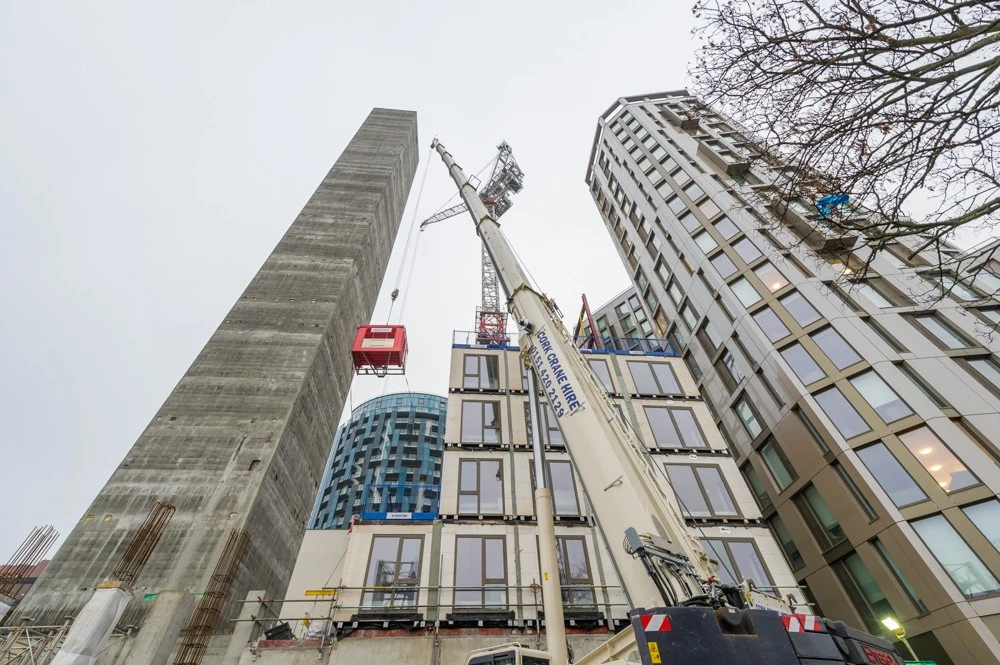
Apex House – Wembley
Key Features:
- Built of 679 fully fitted volumetric modules.
- Completed in 12 months, significantly faster than traditional construction.
- The modules were manufactured in Bedford and installed in London.
- Finished bedrooms, bathrooms, and common areas arrived installed.
- High-quality fit-outs with modern finishes.
Greenwich Millennium Village, London
Part of a large-scale regeneration project in East London, this development features multiple modular housing phases.
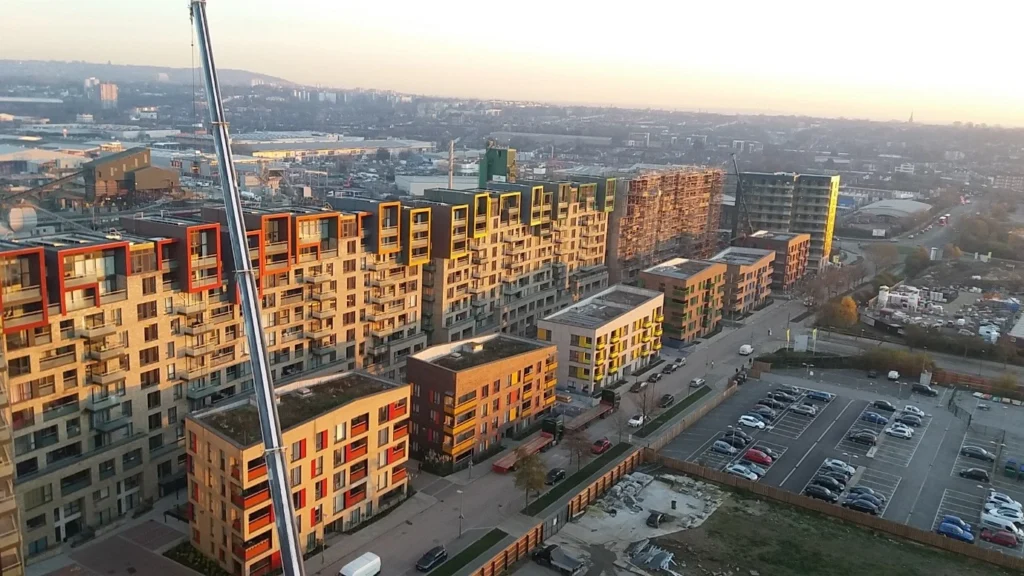
Greenwich Millennium Village, London
Key features:
- Use of panelized and volumetric modular techniques.
- Faster delivery of affordable housing units.
- Energy-efficient designs integrated from the start.
- Support for London’s growing demand for affordable family homes.
Y: Cube – Mitcham, London
Developed by the YMCA, Y: Cube offers affordable modular housing for people at risk of homelessness.
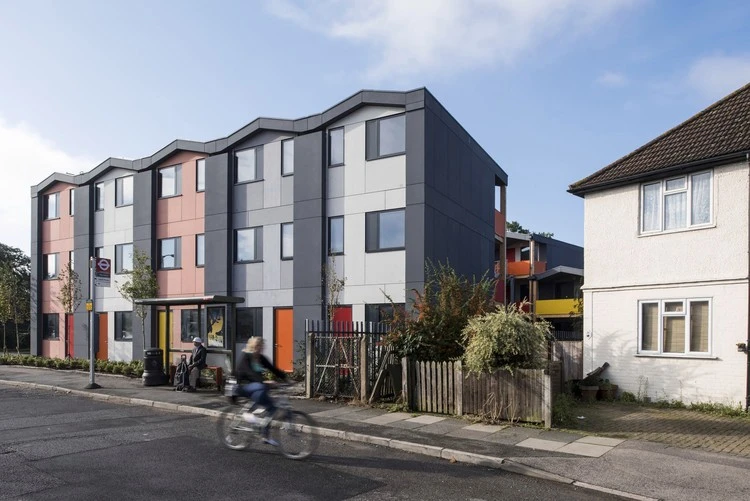
Y: Cube – Mitcham, London https://www.archdaily.com/773370/y-cube-rogers-stirk-harbour-plus-partners
Key features:
- Small, self-contained one-bedroom apartments.
- Constructed entirely off-site and assembled in weeks.
- Cost-effective rental model for vulnerable individuals.
- Fully relocatable modules if needed.
George Street, Croydon
This modular residential tower, built by Tide Construction and Vision Modular Systems, is another record-breaking example.
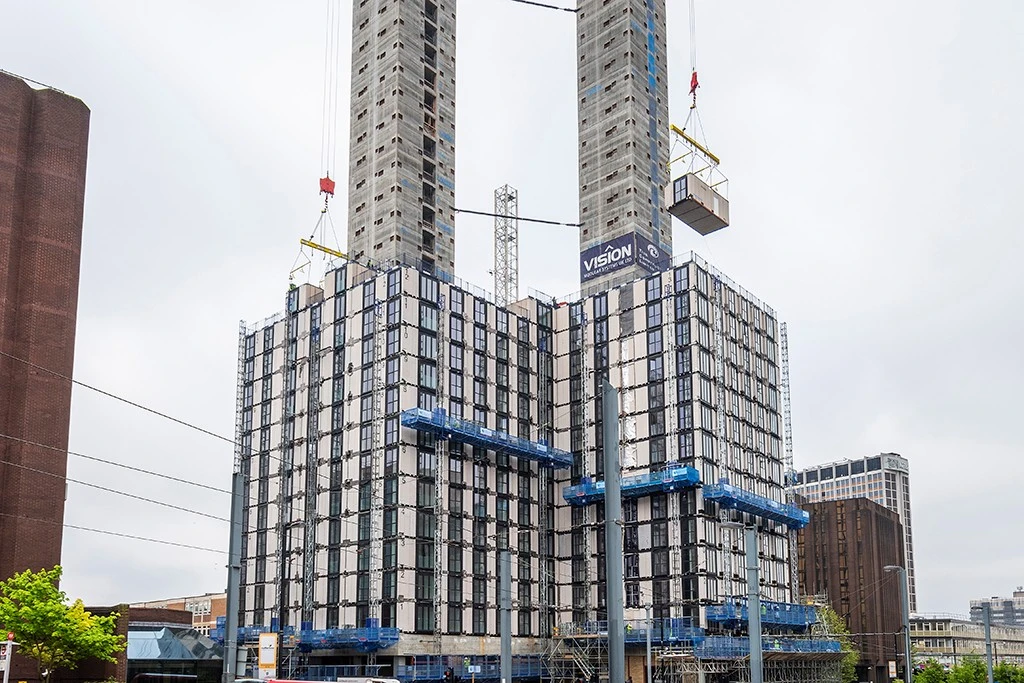
George Street, Croydon https://www.constructionnews.co.uk/project-reports/101-george-street-22-05-2019/
Key features:
- 44 storeys tall, making it the world’s tallest modular building at completion.
- 546 rental apartments delivered in record time.
- Modules were manufactured off-site while groundworks proceeded on-site.
- Fully finished units lowered construction waste and site traffic.
Relevant Technologies that are helpful in Modular Construction
The numerous innovative technologies drive modular construction and turn this emerging construction method into reality, as well as an effective one.
Building Information Modeling (BIM)
- Accurate factory production/ manufacturing is ensured by precise 3D modeling of modules.
- Design conflicts can be avoided before production using clash detection.
- Allows coordination amongst architects, engineers, and factory teams.
- Accelerates the processes of approvals and planning, having a whole-coordinated digital model.
The necessity of the BIM:
In the absence of BIM, modular construction would experience expensive mistakes and rework in factory manufacturing and at the site.
Computer-Aided Manufacturing (CAM)
- CAD models feed directly into automated cutting and fabrication machines.
- CNC (Computer Numerical Control) systems cut components with millimeter precision.
- Factory robots assemble panel systems, plumbing, and wiring.
Robotics and Automation
- Automated framing, panel cutting, and module assembly.
- Robotic arms handle repetitive tasks like insulation, drywall installation, and joinery.
- Consistent build quality with reduced manual errors.
IoT and Smart Monitoring
- Sensors monitor factory machinery performance and maintenance needs.
- Data tracking ensures consistent quality control.
- Smart supply chain management for raw materials.
Cloud Collaboration Platforms
- Seamless collaboration between designers, contractors, and factory teams.
- Instant access to updated plans, schedules, and models.
- Faster issue resolution across distributed teams.
Digital Twin Technology
- Digital Twins provide real-time monitoring of building performance.
- Track energy consumption, equipment health, and occupancy trends.
- Support predictive maintenance and lifecycle management.
Digital twin technology, crucial for modular construction optimization, is set for explosive growth from €16.55 billion in 2025 to €242.11 billion by 2032 with a 39.8% annual growth rate. In buildings specifically, digital twins can reduce carbon emissions by 50% and improve operational efficiency by 35%— SOURCE
Government efforts to promote the use of modules in the government
The UK government has identified that modular building has the potential to help in the realization of the housing needs, and accordingly, various strategies have been put in place to help in achieving the growth of modular building.
Government support for Modern Methods of Construction (MMC) has shown measurable results – 16% of new-build projects in 2023 employed MMC techniques, up from just 9% in 2017. The NHS now requires 70% MMC for new builds and 50% MMC for refurbishment projects over £25 million— SOURCE
The Housing White Paper (2017)
- Demanded the innovation of the housing market.
- Identified off-site construction as one of the solutions.
- Stimulated new ways of construction amongst the councils and the developers (MMC).
The MMC Framework
- Means of a formal definition of the Modern Methods of Construction.
- Supports the adoption of modular solutions in public projects on housing.
- Enables improved data measurements of project results.
Homes England Assistance
- Funds and finances a modular approach for developers.
- Incentivizes affordable housing providers to utilize off-site technologies.
- Investing in research and pilot projects in modular construction.
Adoption by the Local Authority
- Most councils currently favor modular bids when tendering housing.
- In some cases, councils have gone a step further of liaised with modular manufacturers.
- Accelerated planning acceptances are made available in respectable modular solutions.
Net Zero Promises
- Modular construction is green in line with the national sustainability objectives.
- Subdued energy consumption, less waste, and improved insulation are related to carbon reduction.
- The construction of low-carbon buildings is rewarded by the government.
Sponsorship and Partnership of Industries
- Associations such as The Modular Housing Association (UK) also encourage good practices.
- Modular confidence is gaining ground, and there is an increase in the level of privately undertaken investment.
- Modular developments are being encouraged by banks and insurers.
Challenges
Modular construction is surrounded by lots of advantages, but it is advisable to remember that there are also some challenges to the system. The presence of these barriers is normally cited as the reason why, even though it is becoming popular, modular adoption is not completely in the mainstream in the UK construction industry.
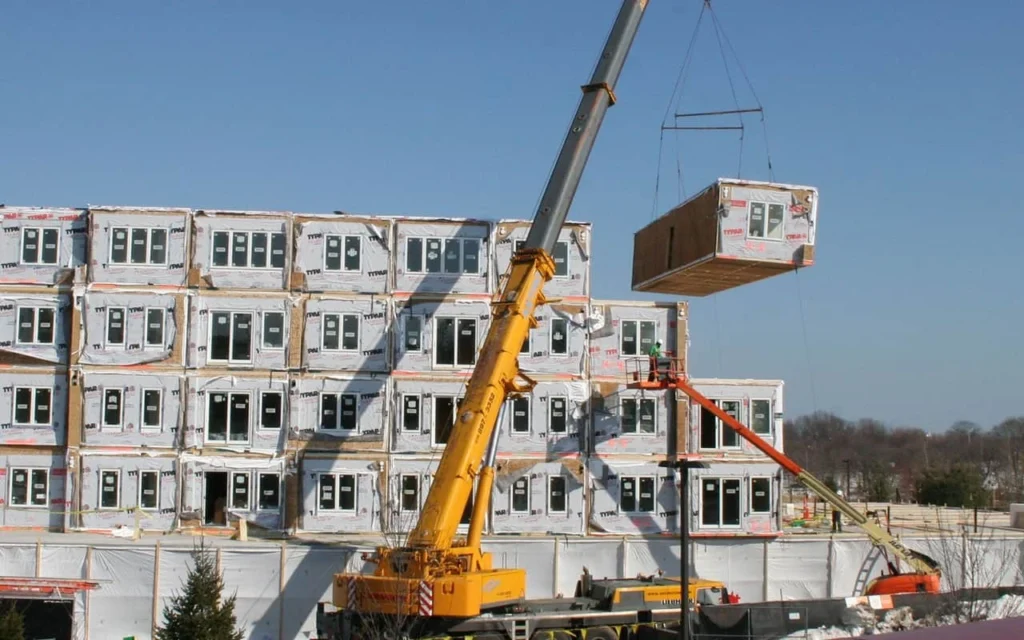
Challenges of modular construction
High Initial Investment in Factory Setup
Building a modular construction facility requires significant upfront capital. Small and medium-sized builders may struggle to secure this level of investment.
Investment is needed in:
- Factory buildings
- Specialized equipment
- Robotics and automation
- Skilled labor and training
- Software integration (BIM, CAD, CAM)
Limited Industry Capacity
- The number of fully operational modular factories in the UK is still limited.
- Many factories are already booked months or years in advance.
- The current production capacity may not yet meet national housing demands at full scale.
Transportation and Logistics Constraints
- Transporting large modules from factories to urban sites can be complex.
- Road width restrictions, bridge heights, and traffic regulations can limit access.
- Modules may need police escorts for transportation in some areas.
- Remote rural locations may have fewer logistical challenges than dense urban centers like London.
Design Flexibility vs. Standardization
- While modular construction allows some customization, it generally works best when designs are standardized.
- Highly customized, architecturally unique buildings are harder to deliver modularly.
- Balancing design creativity with factory efficiencies can be challenging for certain projects.
Public Perception and Stigma
- Some consumers and buyers still associate modular housing with “temporary” or “low quality” solutions.
- There is often confusion between modern modular construction and older prefabricated housing from post-war periods.
- Changing public perception remains a key education challenge for developers and the government.
Planning Approval Hurdles
- Local authorities may lack experience assessing modular developments.
- Planning frameworks are still largely written for traditional construction processes.
- Approval delays still occur while officials evaluate non-traditional designs and manufacturing approaches.
Financing and Insurance Barriers
Some banks, mortgage lenders, and insurers still treat modular housing cautiously. Lenders are slowly updating their criteria, but full financial mainstreaming is still underway.
Concerns exist around:
- Module lifespan
- Long-term structural performance
- Resale value uncertainties
Coordination Between Stakeholders
Poor coordination can lead to costly delays if one party falls behind schedule. Modular projects require close coordination between multiple parties, including:
- Architects
- Engineers
- Factory production teams
- Site contractors
- Transportation companies
Skills Gap and Training Needs
- Factory workers require specialized skills different from those of traditional on-site laborers.
- BIM modelers, digital coordinators, and machine operators are in high demand.
- Widespread training programs are still catching up with the industry’s rapid growth.
Modular Construction in the UK
Although modular construction is not an easy task yet, its prospects in the long run in the UK are vastly rich. Some of the trends indicate that modular will have a significantly bigger role to play to eliminate the housing crisis and alter the housing industry.
Government Support Will Continue to Grow
The UK government views modular construction as a critical tool for meeting national housing targets. Public sector demand (schools, hospitals, social housing) will continue driving growth.
More government-backed funding programs are expected to encourage:
- Factory expansion
- Innovation in modular design
- Training and workforce development
- Pilot projects for large-scale adoption
Net-Zero and Sustainability Goals
The UK’s legally binding net-zero carbons targets for 2050 align perfectly with modular construction benefits. Future building codes will increasingly favor low-carbon building methods, boosting modular adoption.
Modular homes offer:
- Less on-site waste generation
- Lower embodied carbon during manufacturing
- Energy saving through better insulation and airtight houses
Cost will be cut by Technological Developments
- Factory production is getting even more efficient because automation, robotics, and AI have become more efficient.
- Integration of BIM and Digital Twin is to become an additional shortcut in design and operations.
- The unit cost of modular homes will go down further as the technology becomes better.
Financial Institutions Becoming More Comfortable
- As more successful modular projects are completed, lenders and insurers are gaining confidence.
- More standard mortgage products for modular homes are becoming available.
- Long-term performance data is helping banks better assess risk and asset value.
Changing Public Perception
High-profile, successful modular housing developments help change public attitudes. Modular homes are now being positioned as desirable, high-performance properties. Media coverage is increasingly highlighting:
- Modern design flexibility
- High build quality
- Energy efficiency benefits
Large Developers Entering the Modular Market
These companies are building massive factories capable of producing thousands of units per year. Private sector leadership will help drive industry standardization and acceptance.
Major UK homebuilders are investing heavily in modular:
- Legal & General Modular Homes
- Berkeley Group’s Urban House system
- Ilke Homes
- Top Hat
Introduction to how Companies Can Transition to Modular Approaches
A phasing plan eases and improves the practice of modular construction by construction companies, developers, and housing associations that may wish to begin by doing so.
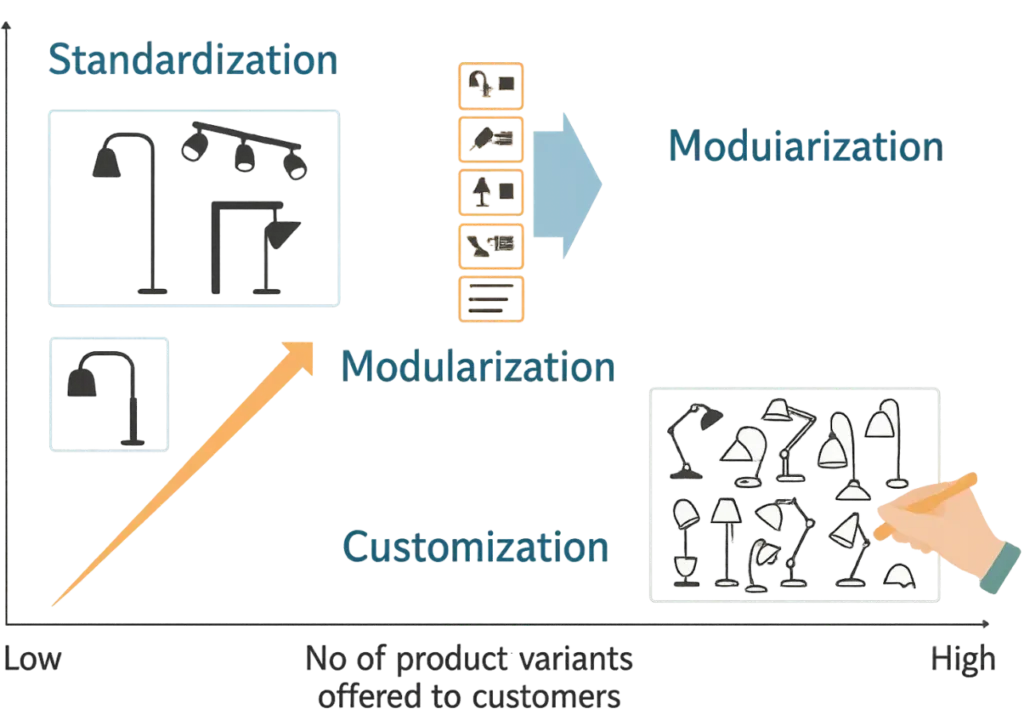
How Companies Can Transition to Modular Approaches
Step 1: Carry out Feasibility Studies
Examine what projects are most appropriate to be offered in the form of modular solutions. Take things into consideration such as:
- Site accessibility
- The scale of a given level of development is the first parameter of the given level of development.
- Speed requirements
- Chances of repetition of the design
Step 2: Investments in BIM Capabilities
Modular design can be carried out successfully based on BIM modeling.
- Invest in an internal BIM team or contract local BIM service firms.
- BIM to interrelate building structural needs, architecture and MEP needs and factory production needs.
Step 3: Choose Carefully the Modular Suppliers
A set protocol of communication between design teams and factory teams would be established. Tie up with well-reputed modular manufacturers that have:
- Track records
- Good standards of production
- Open schedules and procedures
- The experience in UK regulatory compliance
Step 4: Project Teams Training
Make sure the office and site teams are aware of the modular workflow differences from the traditional builds. Train all the employees in:
- Modular undertaking management
- Factory collaboration
- Digital coordination
- BIM interchange
Step 5: Get Early Involvement of Planners and Inspectors
- Incorporate local authorities into the discussion at the initiation.
- Make planners and building control officers learn about modular designs.
- Exchange manufacturing information and BIM models to enhance speedier approvals.
Step 6: Formulation of Long-term Modular Plans
A long-term approach enables companies to roll out the modular adoption in various projects to different marketplaces. In case of success, speculate:
- Having long-term supply contracts with modular factories.
- Investing in custom factory setups of large-scale developments.
- Acquisition of modular design capabilities in-house.
Role of BIM & CAD Services Like Tesla CAD UK
BIM and CAD services providers play a crucial role in enabling modular construction companies to succeed, particularly during the early transition phase.
Detailed BIM Modeling for Modular Design:
- Create precise 3D models optimized for factory production.
- Ensure exact module dimensions, connections, and assembly sequences.
- Eliminate design conflicts before manufacturing starts.
Clash Detection and Digital Coordination:
- Identify conflicts between structural, MEP, and architectural systems early.
- Minimize costly manufacturing delays.
- Improve collaboration between factory and site teams.
Manufacturing Data Integration:
Convert BIM models into factory-ready files for:
- CNC machines
- Robotic systems
- Automated cutting equipment
Lifecycle Digital Twin Creation:
- Prepare models for future conversion into operational Digital Twins.
- Support predictive maintenance and energy optimization after project completion.
Compliance and Regulatory Documentation:
- Ensure models meet UK building standards and modular regulations.
- Support planning applications and approvals with fully coordinated BIM data.
Flexible Support for Modular Startups and Large Developers:
- Provide scalable BIM and CAD services, whether companies are piloting modular or operating full-scale factories.
- Offer cost-effective remote design support for companies across the UK.
This is the thing that could make modular construction particularly exciting because it is aligned with the other ambitions regarding sustainability and digital innovation. The implementation of the BIM, Digital Twins, and IoT tools enables modular housing not only to boost its speed and affordability but also to actively participate in the net-zero goals of the UK, long-term assets ratings, and become the standard of smart housing in the future.
Conclusion
The housing crisis in the UK necessitates radical solutions that will scale to the needs, and modular building has been identified as one of the best solutions. Though this industry may be faced with many challenges, such as logistics, finance, and perception, it has a bright future because it grows fast, has government support, and technology is improving. Following a more modular pathway now, with the aid of BIM and CAD service providers, developers will be able to do more, faster, greener, and at a lower cost, to help bridge the housing gap and create a future built environment better able to stand up to shocks and stresses.
Frequently asked questions (FAQs)
Which technologies are used?
Among the important technologies are the Building Information Modeling (BIM), Computer-Aided Manufacturing (CAM), robotics, IoT monitoring, Digital Twin integration, and collaboration platforms in the cloud.
Where does the UK government fit in the picture about encouraging modular housing?
The government has several policies in place that encourage the adoption of modular, specifically the Housing White Paper, the MMC Framework, the funding system with Homes England, and the faster planning permission for modular projects.
What are the greatest points of difficulty regarding modular construction?
The resistance factors involve expensive start-up costs of factories, small production capacities, logistics-related obstacles, economic barriers in financing and provision of insurance, and blood stain surrounding image.
Will it be the mainstream in the UK housing offer?
Yes. By gaining more government aid, increasing investment in the private sector, and widespread acceptance by the populace, modular housing will undoubtedly form a large portion of housing requirements to face the demands of the future, even as it suits the growing needs and the sustainability objectives.