
Urban Sustainability: Building Greener Cities
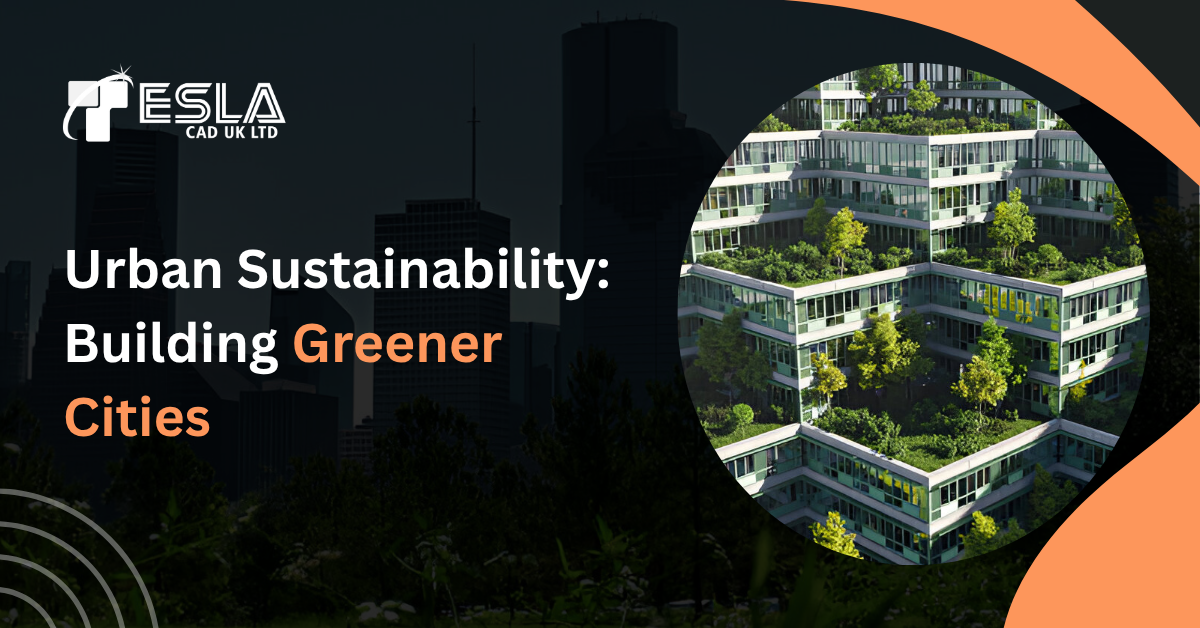
Growth of cities has brought sustainability to the fore of urban planning all over the world. More than half of the world’s population, about 55%, is now living in urban areas, and the UN is forecasting that this percentage will grow to 68% in the near term. There are, however, enormous challenges that may be induced by urbanisation; these include pollution, overpopulation, congestion, natural resource depletion, and increased vulnerability to climate change.
Urban sustainability addresses these issues not only as a transition-oriented passing ideology but also as a critical framework for revolutionising city life. In other words, building economically viable cities that constantly assure the general body of an individual’s physical and mental buoyancy while achieving social equity.
Across the world, new and transformative solutions to these challenges are being linked to the smart city technologies that optimise their infrastructure and conserve energy, investments in public transport, green roofs, community gardens, and much more bring nature back into our highly urban environments. And because these are way more than concurrent, these only end by adding systems and creating a metacity that will probably be more resilient, liveable, and in the future.
In this blog, we will explore how these elements are redefining urban development and helping build greener cities.
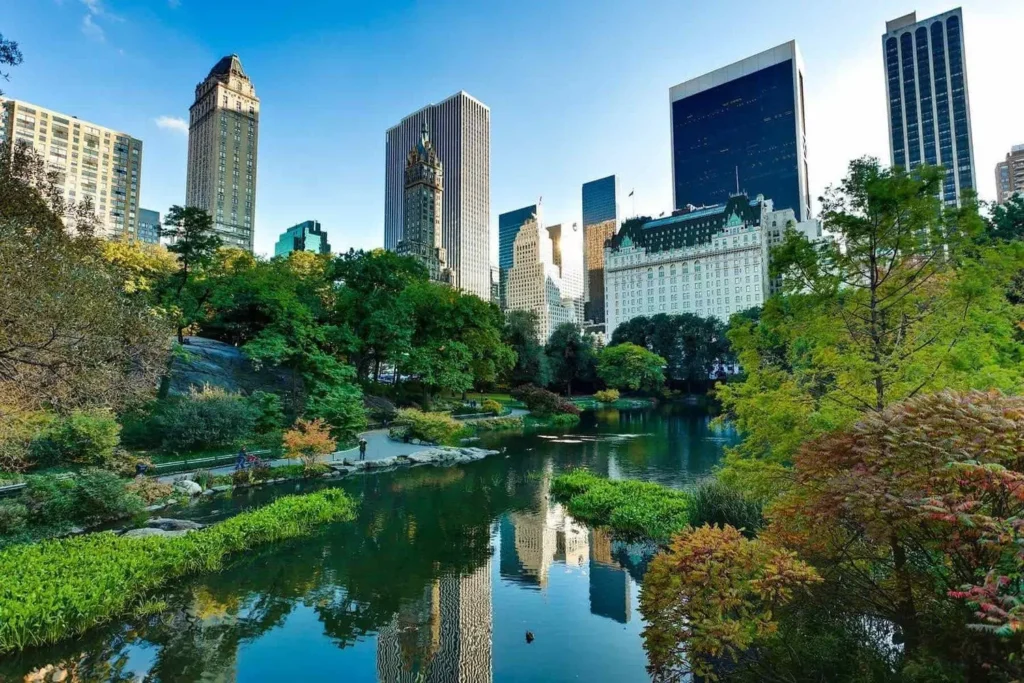
Urban Sustainability: Building Greener Cities
The Concept of Urban Sustainabilit
The balance between urban land and environmental development constitutes urban sustainability
This means bringing down the ecological footprint of urban centres and enhancing the quality of life for the entire urbanite populace. The core principles of urban sustainability are:
- Efficiency: Doing more with less, for example, with energy, water, and materials to construct buildings.
- Resilience: Make cities resilient to shocks from climate change, natural disasters, or pandemics.
- Equity: Fair equality in the distribution of housing, services, and opportunities among different levels of economic and social stratification.
- Ecological integrity: Conserve urban biodiversity, minimise emissions, provide spaces and parks, reduce urban heat islands, etc.
Such actions are in line with global commitments such as the United Nations Sustainable Development Goals, especially goal 11: “Make cities and human settlements inclusive, safe, resilient and sustainable.” The New Urban Agenda emphasises creating a compact, well-connected city that uses land efficiently while enhancing services and promoting sustainability.
Cities such as Amsterdam, Vancouver, or Singapore show that urban sustainability can work when architecture, urban design, policy, and technological approaches are put into place. Whether through zero-carbon buildings or bike lanes with more smart grids, things are already happening toward sustainable cities.
Smart Cities are the Transformation
Smart cities mean an advanced way of implementing everything: from power to transportation. But design isn’t everything. They are essentially always-on ecosystems driven by data and focusing on people to better utilize the efficiency and liveability of cities.
Working of Smart Cities
Smart cities integrate digital infrastructure, such as:
- IoT Technology: Sensors that monitor air quality, noise levels, and traffic flows.
- Smart Grids: Systems that efficiently manage energy distribution and reduce waste.
- Digital Twins: Virtual models that simulate urban development and test solutions.
Artificial Intelligence: Helps to optimise transportation, emergency response, and resource allocation.
An example of this would be streetlights that adjust their brightness according to the movement of pedestrians-conserving energy and enhancing safety.
Sustainability Wins from Smart Cities
- Efficient Resource Management: Automated control over water, energy, and waste systems.
- Reduced Carbon Emissions: Smart traffic systems that minimize idling and emissions.
- Enhanced Public Services: Real-time issue reporting via apps, improving civic engagement.
- Data-Driven Planning: Better zoning, infrastructure, and environmental decisions based on real-time insights.
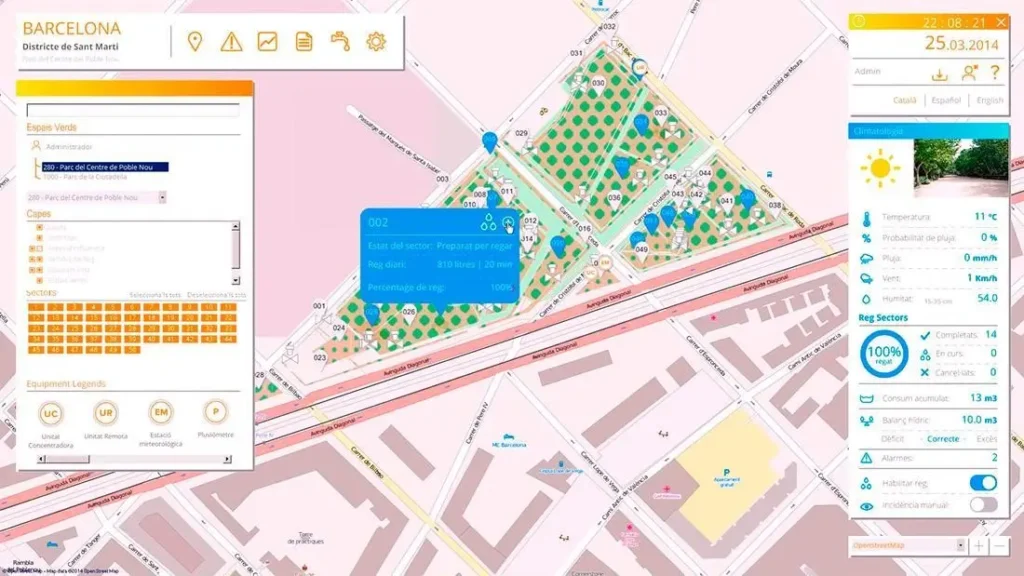
Saving Water with smart irrigation system in Barcelona
Global Examples
- Barcelona, Spain: Smart irrigations systems and public Wi-Fi zones support sustainability.
- Singapore: From Automated Buses to Massive Urban Sensor Networks, the Nation is Smart.
- Amsterdam, Netherlands: Data analytics help retrofit buildings for energy efficiency while driving citizen engagement.
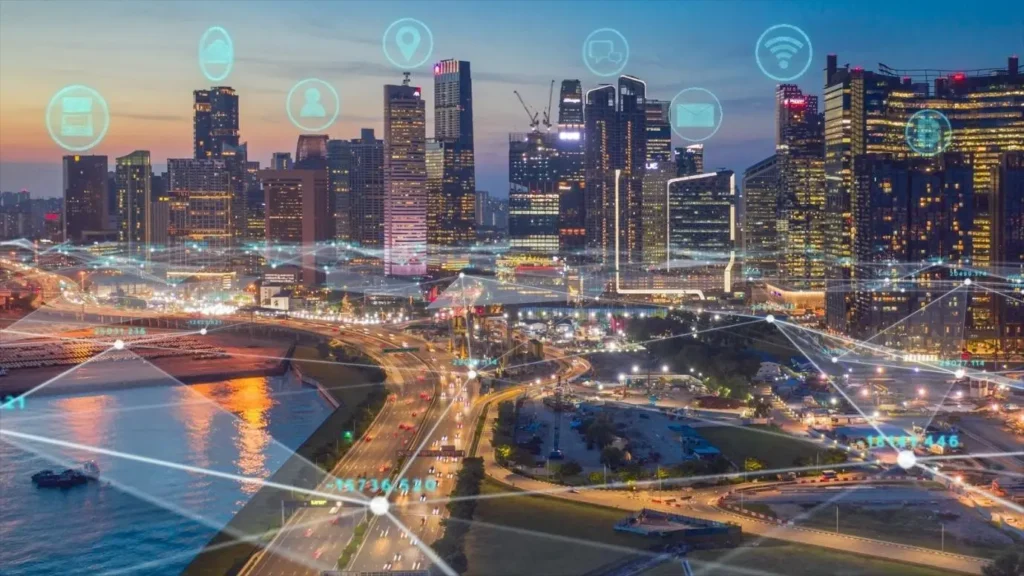
Singapore The World ‘s Smartest City
Challenges to Overcome
- Privacy concerns over data collection.
- Digital inequality that leaves some residents behind.
- High initial costs that deter smaller cities.
Despite these challenges, the smart city model remains a scalable pathway toward sustainable urban growth, especially when human well-being remains at the core.
Public Transportation: The Backbone Of Cities
Because public transport is the most efficient, affordable, and sustainable system in any green city, it is the last act of desolation people living in urban centres can do. Joining all dots would keep millions of people stuck in traffic and choke on polluted air, without a robust transit network. An efficient public transportation system keeps life manageable for urban residents and plays a role in reducing the environmental and social impacts a city has on its people.
Electrified Fleets
This is one of the greatest advances in public transport, going from electric vehicles to electric vehicles. These electric buses, trams, and trains reduce air pollution and greenhouse gas emissions. The cities that adopt the electric fleets see a pronounced reduction in traffic-related emissions and improvement in the quality of air for their citizens.
Integrated Systems
Efficient public transportation is that which connects all forms of transport- bus, subway, tram, bike, and even walking paths. This kind of integration gives residents the ability to switch modes of transport without having to own or use a private vehicle. This encourages a culture of travel that is shared and sustainable.
Last-Mile Connectivity
Public transport needs to be accessible to be effective. Last-mile solutions such as bike programs, electric scooters, and people-friendly streets can lead people to or from public transit, making cars unnecessary to reach transit stations. Such access should even extend to those who live in the most remote areas.
Case Example
Copenhagen, amongst the best in the world when it comes to integrated public transport, has a very good bike-sharing program, all in conjunction with the city’s public transit. Some 62% of the residents commute via bicycles; thus, Copenhagen has an urban transport system that is quite sustainable and runs efficiently.
Impact
Public transport reduces the proportion of trips made in private cars, thus lowering significantly emissions as well as traffic congestion. Furthermore, accessible, and integrated transit systems lead to a healthier lifestyle and promote inclusivity.
Walkability, Cycling, and Transit-Oriented Development
In addition to buses and trains, cities must adopt human-centered urban design. It means that walking, cycling, and accessing transit are made easier, pleasantly so, if these options are within a short distance of home or workplace.
The 15-Minute City Concept
A concept that emerged in Paris, the 15-minute city proposes that all fundamental needs—schools, offices, markets, parks, etc.—should be reachable within a 15-minute walk or bike ride. This reduces dependency on cars, enhances local economies, and improves health.
Pedestrian-First Planning
- Expanding sidewalks.
- Traffic calming zones.
- Car-free days or entire zones in city centres (e.g., Oslo and Madrid).
Cycling Infrastructure
Cities like Amsterdam and Portland are investing in:
- Protected bike lanes.
- Cycle-sharing systems.
- Bike-parking facilities at transit stations.
This not only improves health and air quality but also supports low-income communities who rely on affordable mobility.
Did you know?
The 15-minute city concept, pioneered in Paris, is now being adopted in cities worldwide to cut commute times and boost local economies.
Green Rooftops
Green rooftops, or living roofs, are one of the most visible and impactful solutions for liveable cities. Above all, from their conviction, green rooftops build a layer of soil and plants over a waterproof membrane on a building’s rooftop. They can vary from simple sedum mats to intensive gardens with shrubs and trees.
Environmental and Urban Benefits
- Temperature Regulation: Green roofs absorb heat rather than reflecting it and thus mitigate urban heat island effects.
- Energy Efficiency: Buildings having green roofs consume comparatively less energy for cooling and heating.
- Storm water Management: Plants absorb rainwater, thus lessening runoff and decrease the burden on drainage systems.
- Air Quality: Rooftop vegetation helps filter various airborne pollutants and carbon dioxide.
- Biodiversity: Thanks to green roofs, some urban flora and fauna thrive, including bees, birds, butterflies, etc.
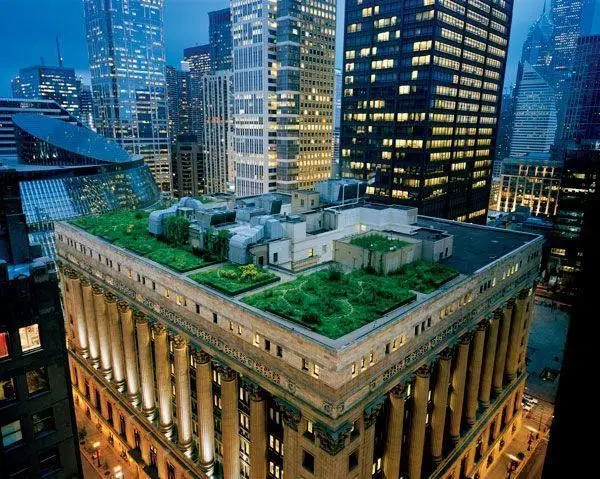
Chicago City Hall Green Roof
Global Examples
- Chicago City Hall, USA: Most famous one among green roofs in North America; significant cooling cost saving in summer.
- Chulalongkorn University in Bangkok: Home to Asia’s largest urban rooftop farm found here, covering 7,000 sq.m.
- Rotterdam, Netherlands: The city provides tax incentives for new buildings with green or blue (water-retaining) roofs to enhance flood resilience.
Design Considerations
- Structural strength is vital for heavier, intensive green roofs.
- Modular systems are used in practice because they are quick and easy to install and maintain.
- Incorporating solar panels with plant life becomes bio solar roofs that benefit extra panel efficiency with cooler temperatures.
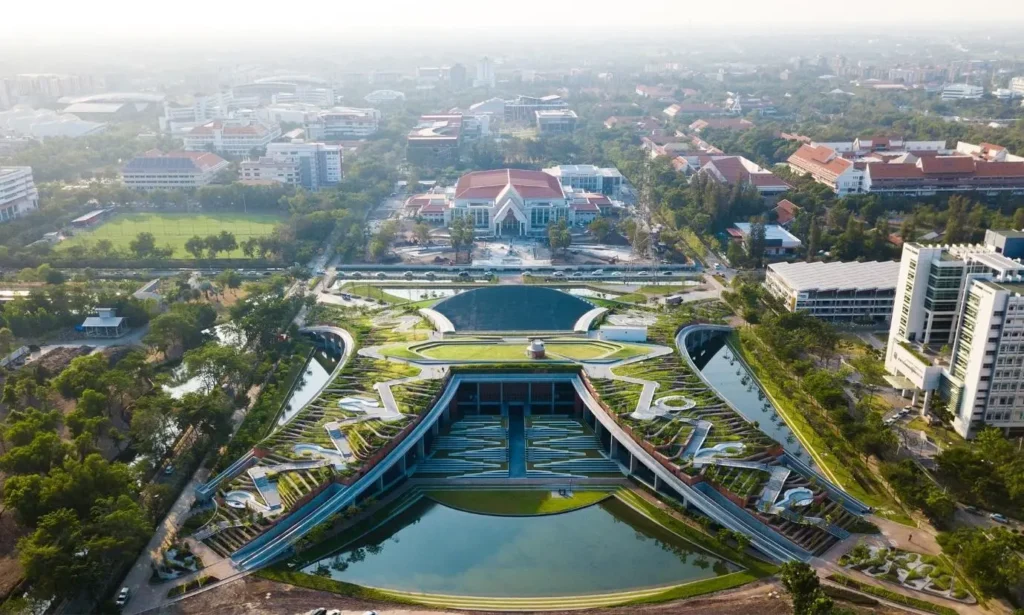
The largest organic rooftop in Asia
Community Gardens: Growing Resilience Together
While green rooftops are often implemented by developers or governments, community gardens are bottom-up efforts—places where people plant, grow, and connect. They are shared plots of land cultivated by groups of residents. These spaces can be found in vacant lots, schoolyards, rooftops, or even balconies.
Benefits Beyond Gardening
- Food Security: Residents can grow fresh fruits and vegetables, reducing reliance on store-bought produce.
- Social Cohesion: These gardens foster trust, friendship, and cooperation among neighbours.
- Education: Great tools for teaching kids and adults about sustainability, nutrition, and agriculture.
- Mental Health: Access to green space and hands-on gardening reduces stress and enhances well-being.
Global Success Stories
- Detroit, USA: Hundreds of urban farms have popped up as the city revitalises itself from economic decline.
- Tokyo, Japan: Despite dense development, rooftop and vertical community gardens flourish.
Technology Meets Community
Apps and platforms now help people reserve plots, schedule shared tasks, and learn gardening tips, making it easier for urban dwellers to participate.

Urban Farm In Detroit
Source: https://www.miufi.org/
Urban Forests and Green Corridors: Connecting Ecology with Urbanity
Urban forests and green corridors refer to networks of parks, tree-lined streets, and preserved natural spaces that are interwoven throughout the city. These large-scale green networks provide enormous environmental and psychological benefits.
Why Urban Forests Matter
- Air Quality & Cooling: Trees absorb carbon dioxide; pollution filtration is synonymous with shade, which can reduce neighborhood air temperature several degrees.
- Mental Health: Access to forests, even small urban patches, significantly improves stress levels and cognitive function.
- Ecosystem Services: Facilitate pollination, noise pollution reduction, and flooding mitigation facilities.
Urban Green Corridors
- They connect parks, forests, and water bodies, allowing wildlife to thrive while providing pedestrian and cycle routes.
- Cities like Singapore, with its Park Connector Network, have created green highways where nature and mobility intersect.
Did you know?
Urban forests can reduce city temperatures by up to 5°C, significantly lowering energy costs for cooling.
Challenges and Solutions
- Space Scarcity: Innovative vertical forests (like Milan’s Bosco Verticale) use building facades to grow trees.
- Maintenance: Many cities are training local volunteers to help care for trees and gardens.
- Land Use Conflicts: Strong urban policy is key to preserving green spaces from being overtaken by development.
The High Line, New York City, integrates green spaces within an urban environment. It is set on an elevated railway track, the park is 1.45 miles long and serves as a serene escape for visitors while providing a habitat for diverse plant species. Green spaces promote environmental sustainability by mitigating pollution and enhancing air quality, while improving mental health of urban populations by providing recreational areas that foster physical interactions.
Energy-Efficient Buildings: The Future of Urban Living
Going along the lines of energy-efficient buildings, it is what future urban dwellers may prefer. Buildings offer some of the biggest contributions to energy consumption and carbon emissions. But instead of designing innovations into buildings, energy savings can decline within its range of the ecological footprint reduction and enhancement in sustainability for a city. These applications for renewable energy use, through smart technology, can be endless.
Passive Design
These methods reduce the amount of energy needed from an artificial system in the building by maximising natural heating, cooling, and lighting. These include proper orientation, effective insulation, natural ventilation, energy-efficient windows, and shading devices. Such measures can substantially reduce artificial heating and cooling system needs and count as energy-saving in buildings.
Integration of Renewable Energy
Integrating solar panels, wind turbines, and geothermal systems is slowly becoming a standard. These systems are a replacement for the consumption of non-renewable fossil fuels and help make the buildings become relatively self-reliant while reducing the carbon footprint.
Smart Technology
Smart technologies like automated heating and cooling systems that work based on occupancy, time of day, and weather conditions. In this way, the building would always optimise energy consumption, making it harder to waste energy through control.
Case Example
It is the Edge, Amsterdam, which gets several architectural achievements towards energy efficiency, combined with solar panels, rainwater collection, and a very smart lighting system that varies with the intensity of daylight outside.
Impact: Going further, energy-efficient buildings are the energy-saving features within a city that reduce energy consumption and greenhouse gas emissions. Thus, workshops related to climate change are constantly being organised and, one day, buildings will be used to make a huge reduction.
Waste Management: Reimagining the Waste Stream in Cities
Waste management in this world of constantly rising populations is a management technique in line with the needs of urban sustainability. Waste management leads to reduced amounts of waste in landfills, decreased pollution levels, and savings meant for resource recovery. Waste-to-energy technology, recycling programs, and other zero-waste activities are beginning to emerge in some cities to reduce the environmental emissions from their cities.
Recycling and upcycling
Many cities around the world have launched comprehensive recycling programs. An example is where residents are sorting their waste into recyclable materials, landfill, and compost items. Well, upcycling takes that step even farther by finding another useful purpose for discarded items, such as turning old plastics into new building materials.
Waste-to-Energy: Waste-to-Energy (WTE)
It use waste material normally taken to landfills to make electricity or even heat. High-temperature incineration is capable of converting waste to energy that can be fed back into the grid or used for district heating purposes.
Zero Waste Initiatives
In this case, cities will try to divert as much waste as possible away from landfills through lowering consumption, reusing materials, and composting organic waste. Cities like San Francisco have deeply penetrated this movement with impressive recycling rates and lower environmental footprints.
Did you know?
Some cities, like San Francisco, divert over 80% of their waste from landfills through aggressive recycling and composting programs.
Case Example
The municipality of Kamikatsu, Japan, has a zero-waste policy, obliging its residents to separate their waste into 45 categories. The rigorous separation enables over 80% of waste to be recycled in Kamikatsu, making it one of the few sustainable cities in Japan.
Impact: Waste management not only shrinks the environmental footprint of cities but also catalyses a circular economy in which materials are reused and eventually repurposed, thus reducing pollution and filling fewer lands with it.
Vision of a Greener Future
A truly sustainable city cannot have one model-it is a living dynamic system that includes: smart systems optimized for minimal waste and maximum productive use; green buildings and green roofs facilitating nature in a human’s daily life; walkable neighbourhoods promoting clean and inclusive mobility with electric transport; community gardens and forests creating resilience and local food production; and policies that forge a bridge toward long-term environmental and social justice objectives. These activities enable the community to manage, design, and protect its urban ecosystems. This vision calls for not just top-down investment but also ongoing dialogue between policymakers, designers, environmentalists, educators, and, at last, the citizens themselves.
Conclusion
Urban sustainability, defined beyond energy-efficient buildings or smart mobility, involves a reinvention of the fabric of our cities. The sustainable city of the future will include innovation, ecology, and equity. It comprises everything from smart technology to sustainable public transit systems to green roofs, urban forest parks, and community gardens.
Smart technology allows us to track, manage, and redirect waste. Public transit systems reduce emissions and are accessible. But finally, it’s the green infrastructure with natural systems such as green spaces, rooftop farms, and vertical forests that bring about life, resilience, and aesthetic beauty back into our urban landscape. Yes, there is the important question of the people inhabiting the city. When we enlist communities to design their environment, be it via participatory design, growing local food, or simply preventing invasive maintenance, we create better neighbourhoods and grow social cohesion. Urban sustainability is mainly about people, their health, their environment, and future generations.
All cities are on the front line dealing with the climate crisis, which offers another opportunity as such for urban sustainability endeavors. Any city planner, politician, architect, entrepreneur, or ordinary citizen is part of the answer. We make cities that would thrive rather than just survive, green. Let’s build greener cities not just for the sake of efficiency, but for joy, justice, and generations to come.
Frequently Asked Questions
How do smart cities contribute to sustainability?
Smart cities use technology such as sensors, analytics, and automation to optimize energy consumption or waste disposal as also controlling traffic and improving services. Hence, they lessen carbon footprints while maximizing the efficiency of urban systems.
What are green rooftops in urban areas?
Green rooftops help mitigate the urban heat island effect, control stormwater, improve air quality, enhance energy efficiency, provide green space for urban residents, and sustain biodiversity.
How do community gardens help urban sustainability?
Community gardens provide access to fresh food, strengthen social contacts, and reduce food miles while introducing sustainable practices. They also help to convert useless land into productive green spaces.
What is the role of citizens in building greener cities?
They engage with local community programs, live green lifestyles, push for policy changes, and are the caretakers of the whole green infrastructure. Empowered communities become resilient and participate actively in shaping the urban future more healthily.